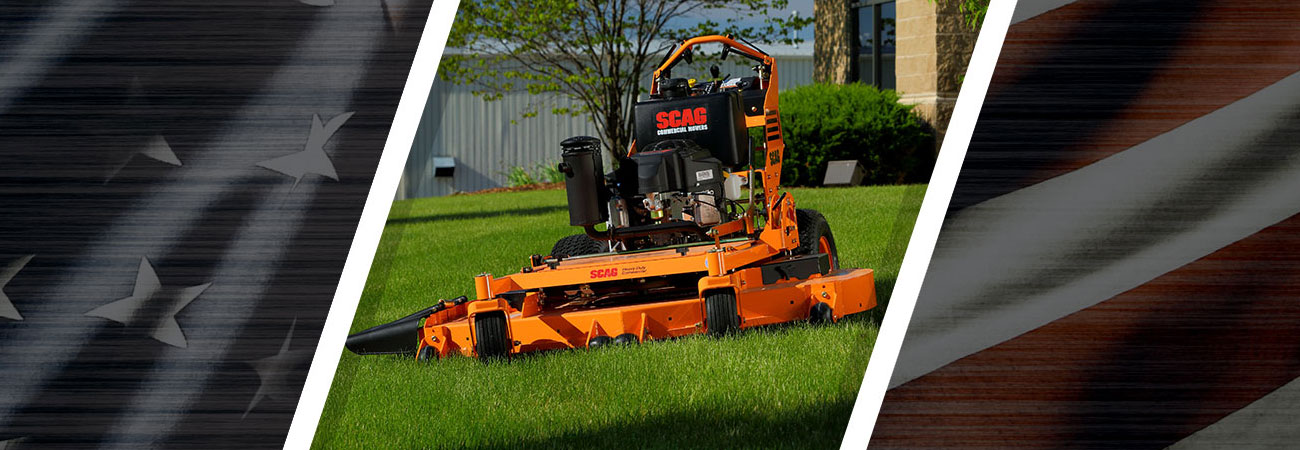
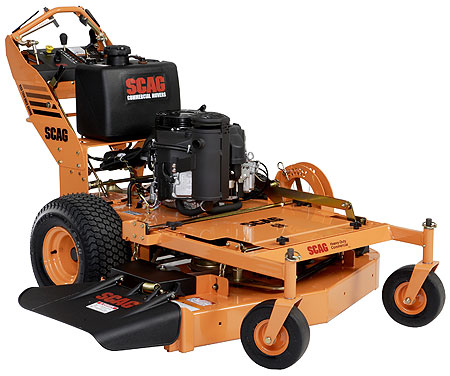
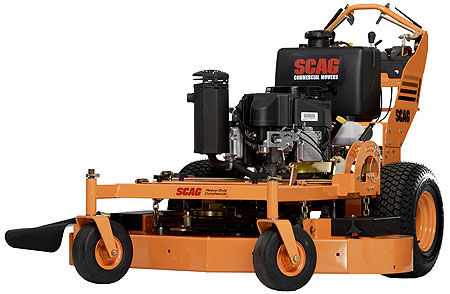
| The Scag SWZT Zero Turn Walk Behind
Mower sets new standards in comfort and quality. Its outstanding operator
control system, floating, easy-adjust cutter deck and smooth and powerful
hydraulic drive system makes mowing a dream. In fact the SWZT may just
be the smoothest walk-behind Scag has ever built.
The incredibly ergonomic control system was designed to make operation
easy, not a fatigue causing fight. The controls not only contour to the
natural angles of your extended hands, but are placed to keep your hands
out of harms way when mowing next to trees and bushes. The main control
bar is tied together at the top for additional strength and leverage.
When it's time to mow, simply set your desired forward speed, flip the
thumb releases and you are off to an enjoyable mowing experience. Use the
numbered forward speed selector to find just the right speed for the job
at hand.
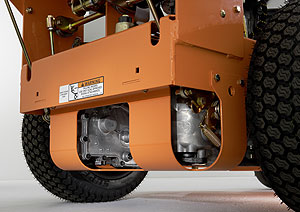
Dual hydraulic ZT-2800 transaxles with cooling fans and steel fan covers
allow independent, amazingly smooth and positive power to each wheel. With
counter-rotation turning, one wheel moves forward while the other moves
backward during a zero-turn, minimizing scuffed turf and increasing maneuverability
in heavily landscaped areas.
With Scag tough, commercial-duty 36", 48", 52" & 61" cutter
decks, you will get the perfect cut, the first time, every time. Heavy
duty construction, a floating style deck and great features like an intergrated
parking brake and the new control system set the SWZT apart from the competition.
Scag Walk-Behind mowers are known the world over for being incredibly
durable and built to last a long, long time. This is not your average walk-behind...it's
a Scag. |
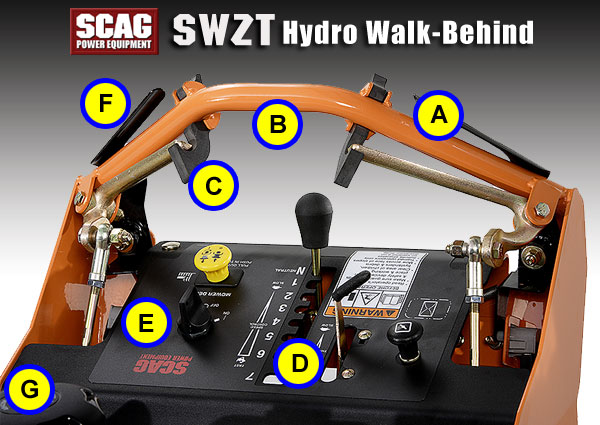
 Ergonomic, low-force
hand controls fall naturally within the angles of your hands. Ergonomic, low-force
hand controls fall naturally within the angles of your hands.
 Control handles
are tied together for extra strength and additional leverage for curb climbing. Control handles
are tied together for extra strength and additional leverage for curb climbing.
 Thumb activated
neutral locks for easy engagement without taking your hands off of the
controls. Thumb activated
neutral locks for easy engagement without taking your hands off of the
controls.
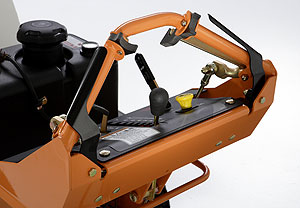
 Numbered forward speed
selector system (1-7) allows the operator to find the perfect speed, and
return quickly to it any time. Numbered forward speed
selector system (1-7) allows the operator to find the perfect speed, and
return quickly to it any time.
 Full featured instrument
panel with throttle, choke, ignition key, PTO and forward speed selector. Full featured instrument
panel with throttle, choke, ignition key, PTO and forward speed selector.
 Operator presence
handles are contoured and comfortable. Operator presence
handles are contoured and comfortable.
 High contrast fuel
gauge is easily visible from the operating position High contrast fuel
gauge is easily visible from the operating position |
|
. |